 YouthCare Connect
Food & Environment
Are We Ready for Cellular Agriculture Worldwide?
By Gavin Ng, YouthCare Connect, 5/7/2026
By 2030, cellular agriculture holds a high potential of being widely accessible to regions such as Europe and Asia. An important point to note is that cellular agriculture produces products that have no difference in taste from authentic meat. It additionally provides hope for a future where animals would no longer have to suffer through the cruelty of slaughterhouses, a future where greenhouse emissions are not a widely recognized conflict.
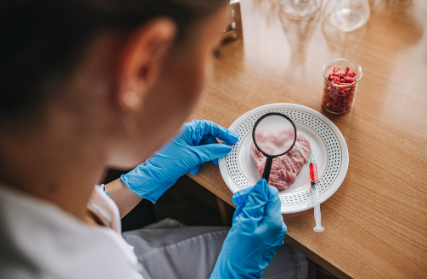
Cellular agriculture, also known as lab-grown meat, has gained popularity in recent years as it addresses many environmental crises. Biomedical Engineers have developed lab-grown meat through multiple steps. According to Mayo Clinic, “[Stem cells] are able to make more cells like themselves. That is, they self-renew. And they can become other cells that do different things in a process known as differentiation. Depending on where stem cells are, they can develop into different tissues.” These stem cells have the ability to change their structure and function based on their environmental signals. This allows for the making of meat-like tissues when manipulated. Using stem cells is an environmentally friendly alternative to meat, as no animal slaughter is involved in its making.
Additionally, the meat is made using ingredients that are usually plant-based, like polysaccharides, Zein, and Mycelium. Today, there has been a growing usage of the term “cellular agriculture,” which is used to describe the production of foods using cells from a plant/animal rather than raising them on places like a farm. This process could help reduce greenhouse gas emissions, which are a major contributor to climate change. Unlike factories, slaughterhouses, and agriculture, the production of lab-grown meat avoids methane production, pollution, and animal sacrifice.
The first step in the process of making lab-grown meat is collecting a sample of the stem cells from a living animal. These cells are then differentiated to develop into other types of cells found in the animal’s body. Secondly, the stem cells are placed in a bioreactor that contains culture media, which have the elements to recreate a similar environment for cells that can be found in the animal’s body, and provide them with the nutrients that are necessary to multiply. Bioreactors maintain a temperature of around 98.6°F and oxygen levels to mimic a living body, which allows meat to be produced without raising or killing any animals. In addition, bioreactors are able to use renewable energy, which is environmentally friendly as it does not require the use of fossil fuels. Next, the culture media changes the stem cells to differentiate into the three main components that make up meat: fat, muscle, and connective tissue. Scaffolding occurs when the cells become separated and are arranged into certain types of meat that they are producing. According to the European Food Information Council, scaffolding is…, “edible material that supports the organisation of meat cells into the desired shape, for example, a steak, or mincemeat. The scaffold does more than just hold cells together. It also carries nutrients and helps them differentiate even further.” This step is especially important for producing some meats like steaks since they have more complex structures. Eating cell-based agriculture would eliminate the risk of foodborne illnesses, like Listeria, E. coli, and Salmonella.
On the other hand, there are some current challenges and restrictions to cellular agriculture products. Although it may offer many eco-friendly benefits, the technology used is still very expensive and not yet widely accessible. The process for making cell-based meat requires certain types of specialized equipment, such as bioreactors, which may use up large amounts of energy. As of April 2026, only three countries have approved the sale of cellular agriculture products: Singapore (2020), the United States (2023), and Israel (2024), showing how the development of this is still in major work. Furthermore, Europe has not yet supported its production due to the economic toll it could potentially have on the farming industry. Even in countries where it has been improved, lab-grown meat is yet to be implemented in common food chains, such as restaurants, fast food, and markets. Another limitation is receiving Government approval. They must ensure that products like cell-based meats meet the United States Department of Agriculture Food Safety and Inspection Service Standards, promising the meat is safe to be sold in markets and consumed.
Ongoing research and technological advancements are expected to help lower costs and improve the quality of production, making cellular agriculture products a more reliable option in the coming years. In conclusion, cellular agriculture products eliminate the need to raise livestock for food and can help change the agricultural industry in a different direction. Even though this would break traditions of raising livestock, this is a safer option for both humans and animals alike. Although it still faces economic and technological challenges, I think it should be supported by more people because it reduces environmental harm and animal suffering. As we move into the future with a more sustainable food system, its success will depend on the trust of the public. The one question is: would consumers trust scientific breakthroughs like this?
Works Cited
Eufic. “Lab Grown Meat: How It Is Made and What Are the Pros and Cons.” Www.eufic.org, 17 Mar. 2023, http://www.eufic.org/en/food-production/article/lab-grown-meat-how-it-is-made-and-what-are-the-pros-and-cons. Accessed 22 Apr. 2026.
Mayo Clinic. “Stem Cells: What They Are and What They Do.” Mayo Clinic, Mayo Foundation for Medical Education and Research, 21 Jan. 2026, http://www.mayoclinic.org/tests-procedures/bone-marrow-transplant/in-depth/stem-cells/art-20048117. Accessed 22 Apr. 2026.
Monaco, Alessandro. “A Perspective on the Regulation of Cultivated Meat in the European Union.” Science of Food, vol. 9, no. 1, Nature Portfolio, Feb. 2025, https://doi.org/10.1038/s41538-025-00384-0. Accessed 22 Apr. 2026.
Healthcare should always be a human right, not a privilege.
Want to learn more about our mission? Get involved with YouthCare Connect →

