 YouthCare Connect
Healthcare Commentary
Escape From Reality: The Rise of Vaping
By Maryam Waheed, YouthCare Connect, 5/21/2026
Vaping has become a widespread issue among teenagers in recent years. Across the United States, approximately 1.6 million youth reported the use of vaping in 2024.(1) Many youth report that they use vaping as a coping mechanism to reduce stress and anxiety and others are influenced by their peers in order to fit in. This can affect daily lives and create unhealthy habits for teenagers. Vapes contain nicotine, an addictive chemical stimulant found in tobacco. Once an adolescent starts using nicotine, they develop a dependency and slowly become addicted. Nicotine dependency can develop before daily use and can transform brain chemistry permanently. The majority of teenagers use vaping as an outlet for their problems.
Before judging teenagers, we must understand the reasons why they started vaping first.
The main reason why children vape is due to peer pressure. During the teenage years, teenagers try their best to fit in with everyone and the social influence of vaping allows that to happen. Nearly 60% of teenagers get their first vape from a friend.(7) Vaping is perceived to be a social norm and something that is encouraged to become popular. Another factor that contributes to the start of vaping addiction is the appealing flavors and creative marketing aimed towards teenagers. Flavors such as cotton candy, blue raspberry, and watermelon ice can mask the harmful effects of nicotine while making them crave more. An example of this is a company named FYRD marketing their “Drip Fried Cream Cakes” vape juice with packaging that resembled the flavor and look of Hostess Twinkies.(2) These marketing tactics are made on purpose to make children fall into unhealthy habits and in return, the companies make a profit from their pain.
Teenagers who struggle with mental health are twice as likely to start vaping.(3) Mental health is a key reason why so many young people picked up vaping. Vaping is often used as a way to self-medicate these mental issues. At the beginning of nicotine use, teenagers may feel stress relief, which is a temporary symptom of nicotine withdrawal.(3) The truth is nicotine does the exact opposite of what teenagers think: it creates more mental health issues and a cycle of irritation. In a 2022 study, frequent e-cigarette use was associated with an increase in suicidal thoughts and depression, with male youth reporting higher rates of sadness.(4)
Nicotine alters the brain chemistry permanently. These effects are more harsh when nicotine is used in adolescent years. There are long-term effects of the cellular and molecular alterations caused by vaping, which can lead to cerebrovascular disease.(5) Neural pathways rewire because of dopamine spikes and create receptors to develop an addiction. When this happens, it disrupts the natural neurotransmitter production. The regular use of nicotine exposes the brain to inflammation and oxidative stress, which damages brain cells that are in charge of memory and learning. The Prefrontal Cortex is responsible for decision-making, focusing, working memory, and emotional regulation and faces significant changes when an adolescent starts vaping such as decreased cognitive function, increased emotional instability, and disruption in the hippocampus (a part of the brain that is in charge of learning and memory storage).(6) The brain doesn’t reach full structural maturity until a person’s early to mid 30’s, so vaping while young can damage regular brain development.
Many schools are quick to give children suspensions and other consequences to kids for vaping but they don’t take time to understand their students. Everyone deserves a support system and a school’s role is to show up and help their students every step of the way. There is more enforcement than education and that doesn’t make any progress in stopping kids from falling into long-term addiction. I believe schools should implement recovery programs and provide resources for help. One program that serves as a successful alternative to youth vaping is INDEPTH by The American Lung Association; it is an interactive program that educates students about nicotine dependency, healthy alternatives, and how to quit nicotine addiction completely. There are several positive testimonies from implementing this program in schools. “The student that uses frequently by the end of the program had flushed her vape and was going to work with her younger brother as well to stop.” One of the many individuals who quit vaping due to this program.(8) Being there for students shows more progress than punishment.
Vaping has taken over the lives of millions of teenagers in the United States but has seen a decrease from 2.13 million youth in 2023 to 1.63 million youth in 2024.(9) There has been an influx of more education and resources to accommodate those who are struggling with addiction and mental health, which has contributed to a significant drop in nicotine use rates. Breaking the addiction cycle must be emphasized amongst youth.
As a community, we should encourage all youth to ask for help and to listen to their stories in order to direct them to a safe recovery. If you or someone you know is fighting nicotine addiction, reach out to a trained coach at 1-800-QUIT-NOW.
Works Cited
1. Office. “Sound the Alarm: Youth Vaping Can Harm.” HHS.gov, 11 Sept. 2025, http://www.hhs.gov/surgeongeneral/reports-and-publications/youth-vaping/index.html.
2. Products, Center for Tobacco. “Misleadingly Labeled E-Liquids That Appeal to Youth.” FDA, July 2020, http://www.fda.gov/tobacco-products/ctp-newsroom/misleadingly-labeled-eliquids-appeal-youth.
3. Truth Initiative. “Many Young People Turn to Nicotine to Deal with Stress, Anxiety and Depression, but Don’t Know It May Be Making Them Feel Worse.” Truth Initiative, 7 Oct. 2021, truthinitiative.org/research-resources/emerging-tobacco-products/many-young-people-turn-nicotine-deal-stress-anxiety.
4. Javed, Sana, et al. “A Scoping Review of Vaping, E-Cigarettes and Mental Health Impact: Depression and Suicidality.” Journal of Community Hospital Internal Medicine Perspectives, vol. 12, no. 3, May 2022, pp. 33–39, https://doi.org/10.55729/2000-9666.1053.
5. Gilbert, Tobi. Impact of Vaping on Adolescent Brain Development. http://www.ncallianceforhealth.org/wp-content/uploads/Impact-of-Vaping-on-Adolescent-Brain-Development_T-Gilbert.pdf.
6. Henderson, Brandon J., et al. “Age-Dependent Effects of Vaping on the Prefrontal Cortex, Ventral Tegmental Area, and Nucleus Accumbens.” Communications Biology, vol. 7, no. 1, Nature Portfolio, Nov. 2024, https://doi.org/10.1038/s42003-024-07272-5.
7. Valente, Thomas W., et al. “Social Network Influences on Adolescent E-Cigarette Use.” Substance Use & Misuse, vol. 58, no. 6, Marcel Dekker, Mar. 2023, pp. 780–86, https://doi.org/10.1080/10826084.2023.2188429.
8. American Lung Association. “INDEPTH: An Alternative to Teen Nicotine Suspension or Citation.” Www.lung.org, 2024, http://www.lung.org/quit-smoking/helping-teens-quit/indepth.
9. CDC. “Youth Tobacco Product Use at a 25-Year Low, yet Disparities Persist.” CDC Newsroom, 17 Oct. 2024, http://www.cdc.gov/media/releases/2024/p1017-youth-tobacco-use.html.
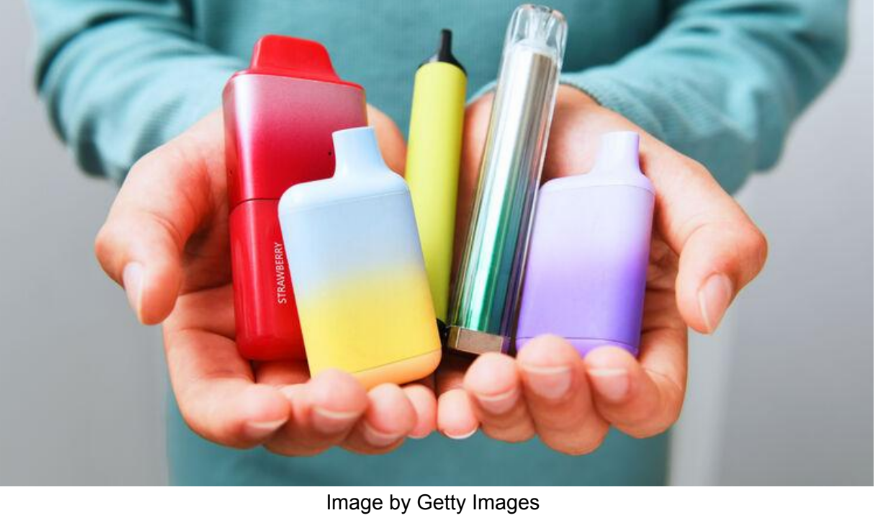
Image: School, In. “Schoolboy Holding Vapes in School.” Getty Images, 9 Jan. 2025, http://www.gettyimages.com/detail/photo/schoolboy-holding-vapes-in-school-royalty-free-image/2192968901. Accessed 19 May 2026.
Healthcare should always be a human right, not a privilege.
Want to learn more about our mission? Get involved with YouthCare Connect →

