 YouthCare Connect
Healthcare Commentary
The Price of Survival: Why Cost Shouldn’t Decide Who Receives Care
By Aanya Kumbhani, YouthCare Connect, 8/2/2026
The World Health Organization (WHO) states, “4.6 billion people lack full coverage of essential healthcare services, with 2.1 billion people facing severe financial hardships or poverty due to out-of-pocket health costs.” Imagine this: you’re a 65-year-old patient admitted in the hospital. The doctors tell you that you need to take a prescribed medication that will help you save your life, a medication that you can’t afford to refill. In cases like these, who decides if you get healthcare? Isn’t staying healthy and being accessible to basic needs despite your financial status a basic human need and right?
Why Healthcare Cost Matters
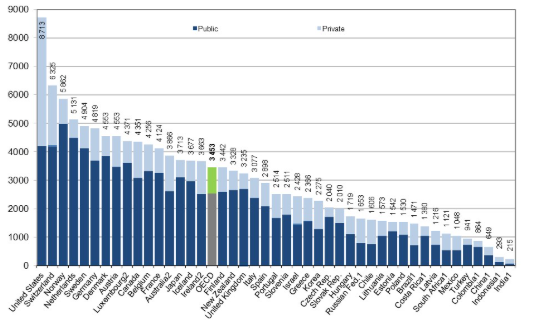
According to the American Medical Association, “Health spending in the U.S. alone has increased by 7.2% in 2024 to $5.3 trillion or $15,474 per capita. This growth rate closely matched the 7.4% rise in 2023, and apart from the 10.5% surge in 2020 due to the COVID-19 pandemic, the 2023 and 2024 growth rates are the highest recorded since 2003 (8.6%).” You may ask, where does all the money invested in the healthcare field go? Statistics show that 31% of it goes into Hospital Care, 15.7% goes into Physician Care, 5.3% in Clinical Services, 3.2% in Home Healthcare, 4.2% in Nursing Care facilities and continuing retirement communities, 8.8% in Prescription Drugs, 17.2% in Personal Healthcare, 1.3% in Government Administration, 5.8% in Non-Medical insurance expenditures, 3% in Government Public Health Activities, and 4.5% in Investments. Subsequently, insurance deductibles cost patients thousands of dollars out-of-pocket before their insurance even kicks in. Deductibles require high upfront costs that are higher than most individuals’ savings.
Who Is Most Affected
Individuals who are uninsured, underinsured, have chronic illnesses, and are diagnosed with rare diseases are the most affected. Being uninsured means that you don’t have health insurance. Underinsured means that you have health insurance that doesn’t give you access to affordable healthcare. Someone diagnosed with a chronic illness means that you have an illness that stays and affects you for a longer period of time than a typical short-term condition. Someone diagnosed with a rare disease means that you are in the small percentage of the population who have this condition.
How Does Cost Affect Medical Decisions
When people can’t afford certain medical necessities such as a dosage refill, it leads to them making choices that lead to more harm than good. Skipping medications or taking smaller doses of one dose may lead to conditions such as asthma, diabetes, or blood pressure irregularities becoming harder to control. Delaying doctor’s visits may lead to patients ignoring their symptoms, causing a possible small issue to escalate to something much larger. Avoiding preventive care may lead to doctors catching onto diseases much later than necessary, leading to the eventual cost of the treatment being more expensive. When looking at it from an overall perspective, all these things lead to an accumulation of both mental and physical stress. This could lead to anxiety and confusion on whether families will choose between healthcare or everyday necessities such as groceries or rent.
The Ethical Question
Mel Robbins once said, “There are people in this world that are starting at a different starting point than you are. There are people who are handed a lot of money and there are people who aren’t. You got the cards that have been dealt to you and that’s what you have.” Keeping that in mind, you must ask yourself, does how much money someone has become a factor in the care they are given? JAMA states, “Public trust is a vital asset for clinicians and medical centers and is crucial for patients to keep seeking needed care, continue adhering to treatment, and achieve positive health outcomes.” If patients can’t afford the care their doctor recommends, they may lose faith in the healthcare system and may avoid care altogether. Would you want to be denied care because you simply can’t afford it?
Read more about this on: https://www.nimhd.nih.gov/about/what-are-health-disparities
Works Cited
Cox, Cynthia, et al. “Health Care Costs and Affordability.” KFF, edited by Drew Altman, 8 Oct. 2025, https://www.kff.org/health-costs/health-policy-101-health-care-costs-and-affordability/. Accessed 2 Aug. 2026.
Delfino, Devon. “Uninsured vs. Underinsured: What’s the Difference?” GoodRx Health, 29 July 2025, https://www.goodrx.com/insurance/health-insurance/uninsured-vs-underinsured. Accessed 2 Aug. 2026.
Maese, Ellyn. “U.S. Adults’ Ability to Afford Healthcare at a Five-Year Low.” Gallup, 17 June 2026, https://news.gallup.com/poll/710942/adults-ability-afford-healthcare-five-year-low.aspx. Accessed 2 Aug. 2026.
“Trends in Healthcare Spending.” American Medical Association, 7 July 2026, https://www.ama-assn.org/about/ama-research/trends-healthcare-spending. Accessed 2 Aug. 2026.
“Universal Health Coverage (UHC).” World Health Organization, 5 Dec. 2025, https://www.who.int/news-room/fact-sheets/detail/universal-health-coverage-(uhc). Accessed 2 Aug. 2026.
“What Are Health Disparities?” National Institute on Minority Health and Health Disparities, National Institutes of Health, 22 Apr. 2025, https://www.nimhd.nih.gov/about/what-are-health-disparities. Accessed 2 Aug. 2026.
Care shouldn’t come with a price tag on who deserves it.
Want to learn more about our mission? Get involved with YouthCare Connect →

