 YouthCare Connect
Healthcare and Technology
TikTok Told Me So? The Truth About Health Misinformation on Social Media
By Hazel Moon, YouthCare Connect
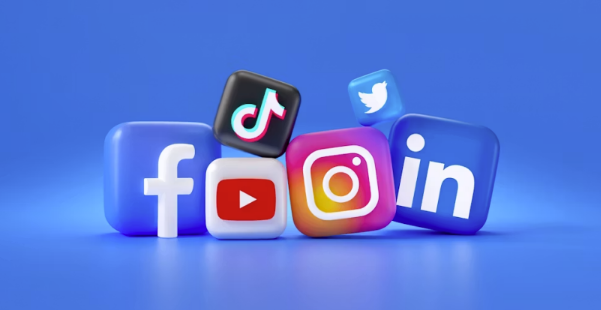
Social media was not originally designed to function as a healthcare system. Many social media platforms such as YouTube, Instagram, TikTok, and Snapchat developed as spaces for communication and entertainment. Now they have increasingly become places where people encounter information about their health. Unfortunately, this also means that many people are exposed to health misinformation, which is health-related information that is false, inaccurate, or misleading when compared with the best medical evidence currently available. It is often spread unintentionally by people who believe the information is true, rather than because they are deliberately trying to deceive others. This differs from disinformation, which involves intentionally creating or sharing false information to mislead people (U.S. Department of Health and Human Services).
For teenagers, this matters because social media is already deeply embedded in their daily life. According to Pew Research Center’s 2024 survey, 96% percent of U.S. teens ages 13 to 17 use the internet daily, while roughly 6 in 10 use TikTok and Instagram and 55% use Snapchat. Nearly half of teens say they are online almost constantly (Faverio and Sidoti). On top of this, research indicates that misinformation spreads far faster and further than true information, likely because false information often is more “novel,” or new and unusual (Vosoughi et al.). As a result, teens are exposed to large amounts of misinformation, including on health topics, that can seem more attractive than the truth.
Social media algorithms can make this problem worse. Algorithms are the hidden rules and principles that determine what content a social media user sees on their homepage or feed. It often is based on providing content that the platform believes will keep a user active and on their site (“Understanding Social Media Algorithms: 101 for Parents”).
However, in the case of misinformation, this could result in a loop in which a user who engages with information is then fed more of it by the algorithm. This could lead to serious consequences, like teens self-diagnosing themselves with conditions that require professional diagnosis and care, such as anxiety or depression (Gellner).
For example: A teenager notices that they have been feeling unusually tired, anxious, or unable to concentrate. Instead of waiting for an appointment, they open TikTok or Instagram and search for an answer. Within minutes, they could encounter videos of people confidently identifying the same symptoms as ADHD, anxiety, depression, an eating disorder, or another medical condition. The teen might then come to believe that they have one of these conditions, and begin to base their actions upon that belief. However, they not only have self-diagnosed based on possibly incorrect information, but they also may be basing their ideas for self-treatment upon the same kinds of misinformation. Even if the teen is correct that they do have one of these conditions, that does not mean that they are then pursuing appropriate treatment for it.
There are several ways to combat this problem, though. Teenagers can start by questioning health-related content instead of immediately accepting or sharing it. They should also consider who created the information, whether the creator has relevant medical qualifications and what evidence supports the claim. However, responsibility should not fall entirely on teenagers because social media platforms should make reliable health information easier to identify, and provide clearer context around potentially misleading claims, and consider how their recommendation algorithms amplify health content. Schools and healthcare professionals can also help by teaching young people how to evaluate online health information.
Social media is not going away, and neither is the need for young people to understand their health. The solution is not to tell teenagers to ignore everything they see online, but to give them the skills and resources to recognize when information should be double checked.
The next time a health claim appears on your feed, pause before you believe or share it and remember that a viral post should never replace professional medical care.
Works Cited
Faverio, Michelle, and Olivia Sidoti. “Teens, Social Media and Technology 2024.” Pew Research Center, 12 Dec. 2024, http://www.pewresearch.org/internet/2024/12/12/teens-social-media-and-technology-2024/.
Gellner, Cindy. “Teens, Social Media, and the Trouble with Self-Diagnosis.” University of Utah Health, 2 Oct. 2023, healthcare.utah.edu/the-scope/kids-zone/all/2023/10/teens-social-media-and-trouble-self-diagnosis.
“Understanding Social Media Algorithms: 101 for Parents.” UAB News, University of Alabama at Birmingham, 17 June 2025, http://www.uab.edu/news/news-you-can-use/understanding-social-media-algorithms-101-for-parents.
U.S. Department of Health & Human Services. “Health Misinformation.” Office of the Surgeon General, http://www.hhs.gov/surgeongeneral/reports-and-publications/health-misinformation/index.html.
Vosoughi, Soroush, et al. “The Spread of True and False News Online.” Science, vol. 359, no. 6380, 2018, pp. 1146–1151, https://doi.org/10.1126/science.aap9559.
Shalabaieva, Mariia. A Group of Different Social Media Logos. Unsplash, 10 May 2023, unsplash.com/photos/a-group-of-different-social-media-logos-HBkpnDVc_Ic. Accessed 9 Aug. 2026.
Healthcare should always be a human right, not a privilege.
Want to learn more about our mission? Get involved with YouthCare Connect →

